Rituals to Assist the Lamented
Embark on the Path of a Psychopomp
This aprenticeship roots you in the ancient, service-worn art of guiding the troubled dead—a calling as old as breath and burial. It will hone your intuitive senses, attune you to the subtle currents of the unseen, and deepens your capacity to hold connective ritual space where personal and collective healing entwines like mycelial threads beneath the soil of the living and the dead.
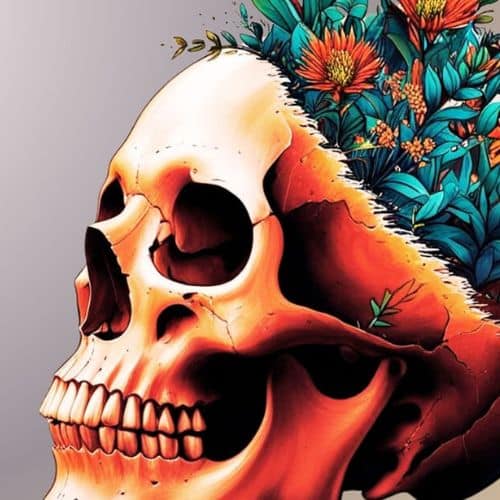
An individual apprenticeship in the ritual arts of tending the dead and accompanying the departed across the thresholds between worlds.
There are forms of ritual knowledge that can be gathered through study, and there are forms of knowledge that become available through sustained relationship, practice, and direct experience.
Psychopomp work asks for the latter.
Walking Between Worlds is an intensive, one-to-one apprenticeship for experienced ritual practitioners who feel called to develop the capacity to work consciously and responsibly with the dead.
Together, we will enter the territories of psychopomp practice: the landscapes of the dead, the spirits who accompany us there, the ritual technologies that support crossing, the complexities of unfinished death, and the ethical responsibilities that arise when we place ourselves in service to those who are no longer embodied.
This apprenticeship is shaped around you.
Rather than moving through a cohort on a predetermined schedule, our work unfolds through individual mentorship, allowing us to attend closely to your existing practice, your relationship with spirit, the places where your skills are emerging, and the places where deeper formation is required.
The work is experiential, rigorous, relational, and deeply practical.
You will study. You will practice. You will be witnessed in your practice. You will receive direct feedback and guidance as you develop the capacity to hold this work for others.
This is an apprenticeship in becoming a psychopomp practitioner.
The Essentials of The
Psychopomp Practitioner Apprenticeship
WHAT IS A PSYCHOPOMP?
A psychopomp (from the Greek ψυχοπομπός, meaning “guide of souls”) is a soul-walker, a boundary-dweller, tasked with dragging the dead from the realm of the living to the unknown beyond. In this work, the practitioner steps into the chaos of non-ordinary reality, where the dead stumble, restless and unmoored, needing a hand to guide them through the rupture of their passage.
To find these lost souls, the psychopomp journeys deep into the underworld, calling upon their helping spirits to hunt down the fractured ones, those tangled in the grief of unfinished business or the trauma of a violent, broken exit. When they are found, the psychopomp doesn’t offer platitudes but meets them in their rawness—engaging with the scars of their lives, the echoes of their pain. Some will be ready to move on, but others, bound by shame or fear, cling to the past, caught in endless loops of trauma, terrified of what comes after.
Here, it’s not about coaxing or comforting but about holding space for the truth. The psychopomp creates an opening for the soul, one born of trust, clarity, and the promise of something better on the other side. For some, it’s simply the reminder of the love that’s waiting for them. For others, it’s a harder fight—a battle to untangle them from their obsession with the earthly plane, where they’ve dug in, creating havoc for the living.
The psychopomp’s job is to keep the borders intact, to ensure that the living aren’t preyed upon by the restless dead. And when a spirit is ready to ascend, the psychopomp opens the gate, often through the power of a higher ancestral being or other forces beyond this world, letting the soul slip through into their rightful place.
Walking Between Worlds: Psychopomp Practitioner Apprenticehip is forged from years of dedicated experience in this specialized, sacred work. It’s for those willing to sharpen their gifts, dive into the murky depths, and become adept in the art of guiding the unwell dead. It’s a privilege to co-weave this with you and I welcome you if you feel the call to deepen your craft in the service of the departed who have yet to find their peace.
Your Apprenticeship
Our aim is clear: to learn how to guide non-blood lineage ancestors to wellness, to break the chains that bind them, and to help them find their way to rest. In this training, you will cultivate a deep understanding of the obstacles the troubled dead face and the rituals needed to break those chains, elevating them toward their rightful place.
Your apprenticeship will include regular private sessions with me throughout the course of our work. These sessions are where teaching and practice meet.
Depending upon where you are in the apprenticeship, our time together may include:
- Teaching
Introducing the cosmologies, ritual frameworks, ethical considerations, and practical skills necessary for psychopomp work. - Demonstration
Witnessing how particular ritual technologies are approached and learning through direct observation. - Practice
Working with journeying, spirit relationship, ritual preparation, crossing practices, and other elements of psychopomp work. - Supervision
Bringing your own cases, experiences, questions, and emerging practices into our sessions for careful examination. - Facilitation
Practicing portions of the work yourself while receiving direct observation and feedback. - Integration
Making meaning of what you encounter and allowing the learning to become part of your embodied practice. The mentorship is responsive to you, the practitioner. Some areas may move quickly. Others may ask us to linger. There is room for repetition, refinement, and the unexpected territories that emerge when one begins working seriously at the threshold of death.
A NOTE ABOUT THE NATURE OF THIS WORK
Working with the dead requires a particular kind of responsibility.
This apprenticeship does not teach psychopomp work as a performance, a spiritual identity, or a collection of techniques.
We are entering relationship with beings, families, histories, places, and circumstances that deserve care.
The practitioner must learn to recognize the limits of their own perception and authority. They must understand when a situation falls outside their capacity. They must know how to protect themselves and others, how to work within appropriate ethical boundaries, and how to remain accountable to the living world while serving those who have died.
For this reason, individual mentorship is central to the training.
There are places in this work where another practitioner can offer information.
There are other places where you need someone who can witness what you are actually doing and help you understand what is happening.
That is the work of apprenticeship.
THE CONTAINER
The apprenticeship is designed as a six-month intensive course of study and practice.
We will establish a regular meeting schedule together at the beginning of the apprenticeship.
The curriculum provides the architecture of our work, while the actual rhythm of the mentorship is shaped around your development.
Between sessions, you will have practices, study, and experiential work to undertake independently.
You should expect this to require approximately 15–20 hours of engagement each month, including private mentorship, study, ritual practice, and integration.
Because this is an apprenticeship, six months represents the foundational container rather than an arbitrary finish line. If particular areas require additional development, we will address them as part of your individual path.
COMPLETION & CERTIFICATION
Completion of Walking Between Worlds is based upon your demonstrated ability to engage the work with appropriate ritual skill, discernment, protection, ethical awareness, and capacity to hold a psychopomp container.
Certification represents completion of this course of study and supervised practice. It does not confer authority within any particular cultural tradition or lineage.
Eligibility, Requirements, Prerequisites
Walking Between Worlds is intended for practitioners who already have a substantial foundation in ritual and animist practice.
You should arrive with:
- An established personal ritual practice
- Experience with journeying or another established method of entering non-ordinary reality
- A developing or established relationship with helping spirits
- Experience working with ancestral or spirit-centered practices
- A strong foundation in ritual protection and hygiene
- Completion of Forces of Nature
- A genuine vocational interest in psychopomp work
This apprenticeship is not designed to introduce the foundations of animism, journeying, ritual protection, or spirit relationship. Those foundations need to already be present.
Investment
$1,500–$3,000 sliding scale
I offer Walking Between Worlds through a sliding-scale exchange based upon income and financial capacity.
There is no application for a scholarship and no requirement to document your circumstances. I trust each practitioner to locate themselves honestly within the range and to consider what is both possible for them and supportive of the continuation of this work.
If you have greater financial capacity, choosing the higher end of the range helps create room for someone with fewer resources to enter the apprenticeship at the lower end.
If you are accepted into the apprenticeship, we will speak together about where you fall within the range and determine a payment rate and payment plan that feels workable.
The financial exchange is part of the container. It is one of the ways we acknowledge the time, experience, attention, and energy held within an individual apprenticeship while making room for different economic realities.
A $500 dollar deposit is required to hold your placement in the training once you have been accepted. Deposits are non-refundable.
Scholarships
Need-based scholarships are typically reserved for BIPOC, those who natively speak a language other than English, LGBTQ+ folks and applicants from economically disadvantaged nations or backgrounds. All who are interested and meet the prerequisites are encouraged to apply.
We do our best to find mutually agreeable solutions for all, and please understand that in order to sustain our business, the livelihoods of our employees, and the health of our network, we cannot accommodate every single request and we do our best and can often work something out, so err on the side of letting us know what you may need.
The Six Thresholds
The apprenticeship follows a foundational sequence through six territories of psychopomp practice.
These thresholds provide the architecture of our work while leaving room for the apprenticeship to respond to the particular practitioner standing before me.

Fortifying the Vessel – Protection and Ritual Embodiment
Before stepping into the work of tending the dead, we must first strengthen the vessel through which we move. This month, we will hone our personal ritual container—the body, the breath, the boundaries—ensuring we can traverse the unseen safely and with clarity.
- Establishing firm ritual boundaries and deepening your relationship with your Psychopomp Guide, who will walk beside you in this work.
- Strengthening pathways of connection through embodied invocation and ritual processes that sharpen perception and heighten potency.
- Cultivating protection strategies and self-care techniques essential for psychopomp work—learning how to fortify yourself so you are not frayed by the spirits you serve.
The Dead’s Cartography – Helping Spirits and Deathscapes
The landscapes of the dead are varied—some lush, some desolate, some tangled in forgotten histories. This month, we turn to those who know the terrain best: our council of helping spirits. They will be our guides through the shifting topographies of death.
- Learning different cosmologies of the Dead’s Realms and their corresponding landscapes.
- Strengthening your connection with a personal helping spirit who will assist in Middle World protection and navigation.
- Developing the art of tracking—following the thread of a spirit’s presence to locate and assist them.
- Sharpening your Clairs (intuitive senses) and using dreamwork as a means of divination, allowing the dead to speak through the quiet corridors of sleep.
Crossing Thresholds – Rites of Passage and the Art of Dying
Death is not a single moment, but a crossing—one that requires ritual attention, guidance, and care. This month, we examine the End of Life Cycle, stepping into the role of both witness and wayfinder.
- Engaging in ritualized Death Rites through visioning practices, learning how to midwife the dying process.
- Exploring the work of the Death Doula, touching on topics such as living wills, Death with Dignity, home funerals, lying-in-state, organ donation, grief tending, memorials, and the many cultural perspectives on death.
- Understanding the importance of ritual at life’s threshold moments—how a well-woven death can shape what comes after.
When the Dead Cannot Move– Obstacles of the Troubled Dead
Not all souls move easily. Some remain tangled in trauma, bound by unfinished stories, shackled by curses, or fractured by soul loss. This month, we step into the work of deep intervention, learning how to retrieve, unbind, and release.
- Understanding soul loss in the dead—how missing fragments keep spirits from fully transitioning, and how soul retrieval can restore wholeness.
- Tracking and unraveling curses and soul contracts—learning to identify the binding forces that keep spirits earthbound and the means of dissolving their hold.
- Working with possession—when another conscious being, living or dead, takes up residence within a body. Learning how to recognize its symptoms and perform the necessary rituals to restore sovereignty to the afflicted.
Rituals For Release – Rituals for the Dead and Ethical Considerations
With skill comes responsibility. This month, we turn toward the ethics of psychopomp work, ensuring that the rituals we craft are both effective and anchored in integrity.
- Crafting your personal crossing-over ritual—the rite you will use to guide the dead, with variations for different situations.
- Learning rituals of appeasement and forgiveness, understanding how unresolved grief and unspoken wrongs can keep spirits tethered.
- Exploring grief as a sacred force—how it moves through both the living and the dead, and how it can be honored through ritual.
- Establishing best practices for psychopomp facilitation, ensuring that our work is done with clarity, consent, and ethical awareness.
Tending the Collective Dead – The Work Beyond the Self
Not all dead belong to individuals. Some belong to histories, to landscapes, to collective wounds that have yet to be reconciled. In our final month, we step into the larger work—tending the forgotten, the unclaimed, the ones who linger in the shadows of time.
- Learning the art of collective rituals for the unwell dead—working with ancestral traumas, mass death sites, and unresolved histories.
- Understanding land clearings—how spirits anchor to places, and how to facilitate their release.
- Looking ahead—how to continue this work beyond the training, deepening your practice in the years to come.
- Participating in a closing ritual—honoring the work, the spirits, and the journey you have undertaken.
Fortifying the Vessel – Protection and Ritual Embodiment
Before stepping into the work of tending the dead, we must first strengthen the vessel through which we move. This month, we will hone our personal ritual container—the body, the breath, the boundaries—ensuring we can traverse the unseen safely and with clarity.
- Establishing firm ritual boundaries and deepening your relationship with your Psychopomp Guide, who will walk beside you in this work.
- Strengthening pathways of connection through embodied invocation and ritual processes that sharpen perception and heighten potency.
- Cultivating protection strategies and self-care techniques essential for psychopomp work—learning how to fortify yourself so you are not frayed by the spirits you serve.
The Dead’s Cartography – Helping Spirits and Deathscapes
The landscapes of the dead are varied—some lush, some desolate, some tangled in forgotten histories. This month, we turn to those who know the terrain best: our council of helping spirits. They will be our guides through the shifting topographies of death.
- Learning different cosmologies of the Dead’s Realms and their corresponding landscapes.
- Strengthening your connection with a personal helping spirit who will assist in Middle World protection and navigation.
- Developing the art of tracking—following the thread of a spirit’s presence to locate and assist them.
- Sharpening your Clairs (intuitive senses) and using dreamwork as a means of divination, allowing the dead to speak through the quiet corridors of sleep.
Crossing Thresholds – Rites of Passage and the Art of Dying
Death is not a single moment, but a crossing—one that requires ritual attention, guidance, and care. This month, we examine the End of Life Cycle, stepping into the role of both witness and wayfinder.
- Engaging in ritualized Death Rites through visioning practices, learning how to midwife the dying process.
- Exploring the work of the Death Doula, touching on topics such as living wills, Death with Dignity, home funerals, lying-in-state, organ donation, grief tending, memorials, and the many cultural perspectives on death.
- Understanding the importance of ritual at life’s threshold moments—how a well-woven death can shape what comes after.
When the Dead Cannot Move: Obstacles of the Troubled Dead
Not all souls move easily. Some remain tangled in trauma, bound by unfinished stories, shackled by curses, or fractured by soul loss. This month, we step into the work of deep intervention, learning how to retrieve, unbind, and release.
- Understanding soul loss in the dead—how missing fragments keep spirits from fully transitioning, and how soul retrieval can restore wholeness.
- Tracking and unraveling curses and soul contracts—learning to identify the binding forces that keep spirits earthbound and the means of dissolving their hold.
- Working with possession—when another conscious being, living or dead, takes up residence within a body. Learning how to recognize its symptoms and perform the necessary rituals to restore sovereignty to the afflicted.
Rituals For Release – Rituals for the Dead and Ethical Considerations
With skill comes responsibility. This month, we turn toward the ethics of psychopomp work, ensuring that the rituals we craft are both effective and anchored in integrity.
- Crafting your personal crossing-over ritual—the rite you will use to guide the dead, with variations for different situations.
- Learning rituals of appeasement and forgiveness, understanding how unresolved grief and unspoken wrongs can keep spirits tethered.
- Exploring grief as a sacred force—how it moves through both the living and the dead, and how it can be honored through ritual.
- Establishing best practices for psychopomp facilitation, ensuring that our work is done with clarity, consent, and ethical awareness.
Tending the Collective Dead – The Work Beyond the Self
Not all dead belong to individuals. Some belong to histories, to landscapes, to collective wounds that have yet to be reconciled. In our final month, we step into the larger work—tending the forgotten, the unclaimed, the ones who linger in the shadows of time.
- Learning the art of collective rituals for the unwell dead—working with ancestral traumas, mass death sites, and unresolved histories.
- Understanding land clearings—how spirits anchor to places, and how to facilitate their release.
- Looking ahead—how to continue this work beyond the training, deepening your practice in the years to come.
- Participating in a closing ritual—honoring the work, the spirits, and the journey you have undertaken.
Your Apprenticeship Includes
Below are the many ways we will commit to the vessel of learning in community with one another. This includes ways we will connect, dates of engagement, and approximately how many hours of commitment you will engage in should you decide to join the pratitioner training.

Individual Mentorship

The Psychopomp Curriculum
Guided Practice Between Sessions
Supervised Facilitation

Learning Resources.
Community Connection Space
Learn More
-
Individual Mentorship. 12 Private sessions with Shannon throughout the apprenticeship for teaching, practice, supervision, and integration.
- The Psychopomp Curriculum Access to the Walking Between Worlds teachings, readings, recorded material, ritual practices, and supplementary resources.
- Guided Practice Between Sessions Individual practices and assignments designed to deepen your relationship with the material and develop your capacity as a practitioner.
- Supervised Facilitation. Once a month we will meet in our practicum experience. Here you will meet in dyad pods for experiential practice. These calls will be the 3rd Friday of each month and will be three hours in length.
- Learning Resources. Additional course content, including an apprentice workbook, will be available to review, along with material covered in both the lessons and a library of past guest speaker lectures in a Psychopomp Portal.
- Community Connection Space Become a member of an international collective of Psychopomp Practitioners to share resources, and continue further training through exchanges and group rituals.
Ready to Begin Your Journey?
Acceptance into Walking Between Worlds is by application.
Because the apprenticeship involves a close teacher-apprentice relationship, I am interested not only in your previous experience but in what is bringing you toward this work now.
The application allows us to consider whether this apprenticeship is an appropriate next step for your practice.
If your application is accepted, we will schedule an individual conversation before enrollment.
- Consultation Option: If you have questions before or after submitting your application, you may schedule a complimentary 15-minute consultation with Shannon here.
- Prerequisite Requirement: Completion of the Forces of Nature Course.
The Forces of Nature Course is a foundational prerequisite for the Walking Between Worlds Apprenticeship.
🌿 What You’ll Learn:
✔ Meet and develop connection with a primary helping spirit.
✔ Build Ritual Skills of protection
✔ Meet and develop a connection with spirits of place in connection with each elemental direction local to the lands you inhabit.
✔ Cultivate skills of holding ritual space for both individual and group service
✔ Hone an invocation to call these powers to you by envisioning and committing to your shared service to the world.
Your Facilitator
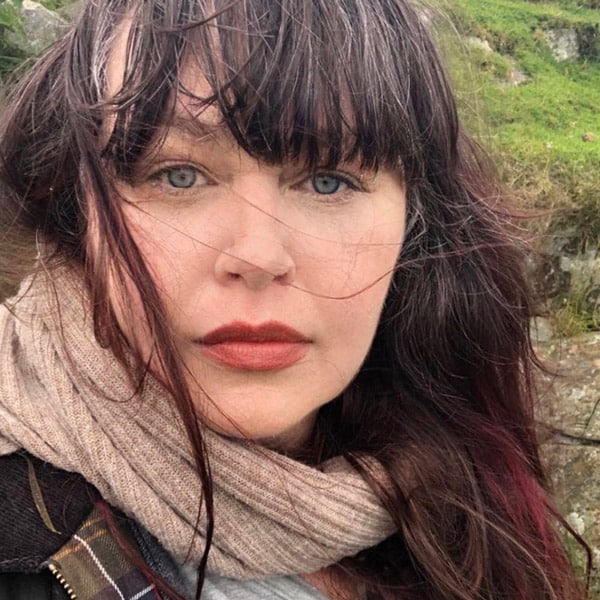
Shannon Willis, M.Ed
Shannon’s work lives at the wild confluence of dream midwifery, oracular listening, ancestral reverence, and ritual arts. She is the founder of Red Earth Healing with more than three decades of experience in ritual arts, animist practice, ancestral work, dreamwork, and holding ceremonial space.
Her work is rooted in relationship: with land, spirits, ancestors, dreams, the living world, and the mysteries that inhabit the thresholds of human experience.
Walking Between Worlds emerges from this long body of practice and from years of teaching practitioners how to enter liminal spaces with greater skill, humility, protection, and discernment.
This apprenticeship brings that experience into a more intimate form.
Shannon writes and weaves spiritual accompaniment for emerging leaders and cultural edge-walkers—those drawn to the holy work of remembrance, repair, and rooted resistance. She dwells with her son and their furred companions near the mist-kissed shores of the Salish Sea, on the ancestral and living lands of the Twana-Skokomish people.